
Hydraulic Bogie Pressure Tester Railway Freight Wagon Depot Workshop Equipment
- Category: Railway Maintenance Workshop Equipment
- Nominal pressure:120kN
- Max. bogie wheelbase: 2000mm
- Power supply: 3-phase 5-wire AC 380V, 50Hz, 5kW or customized
- Efficiency: Approx. 1.5 min per set
Hydraulic Bogie Pressure Tester Railway freight wagon Depot Workshop Equipment
1. Brief introduction:
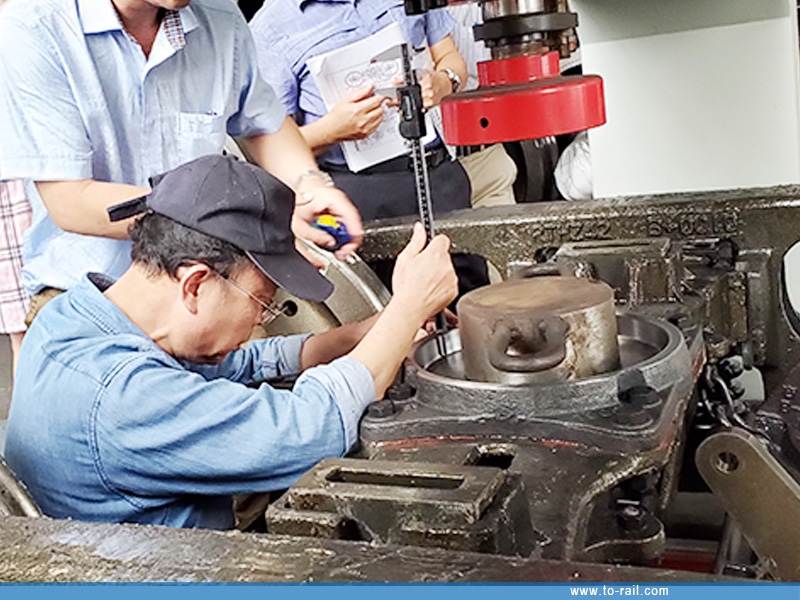
The bogie pressure tester is a specialized equipment designed to verify the free height of the center plate and its height under specified loads for assembled freight bogies. It ensures compliance with production and maintenance technical specifications.
2. Key Applications:
Bogie pressure test is primarily used in vehicle manufacturing, maintenance factories, and depot workshops. It supports adjusting coupler height before final assembly and provides quantitative testing, analysis, and evaluation of comprehensive technical indicators for completed bogies.
3. Core Technical Parameters:
|
Parameter |
Value |
|
Max. Free Height |
≤810mm |
|
Nominal Pressure |
120kN |
|
Track Gauge |
1435mm (Standard), 1000mm (Meter), 1676mm (Broad) |
|
Max. Wheelbase |
2000mm |
|
Power Supply |
3-phase 5-wire AC 380V, 50Hz, 5kW |
|
Efficiency |
Approx. 1.5 min per set |
|
Dimensions (L×W×H) |
4700×4090×2150mm |
|
Env. Conditions |
-5℃~45℃, Humidity ≤95% |
|
Seismic Grade |
Grade 8 |
4. System Structure & Operation:
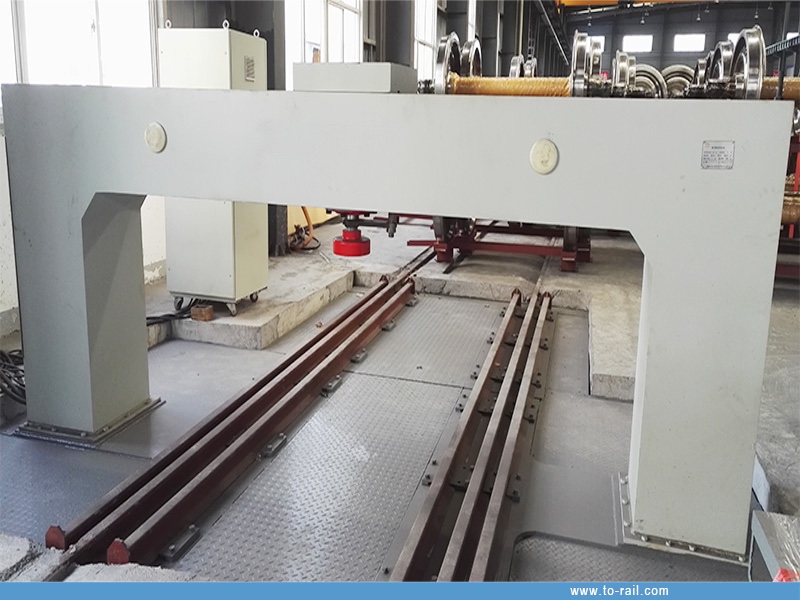
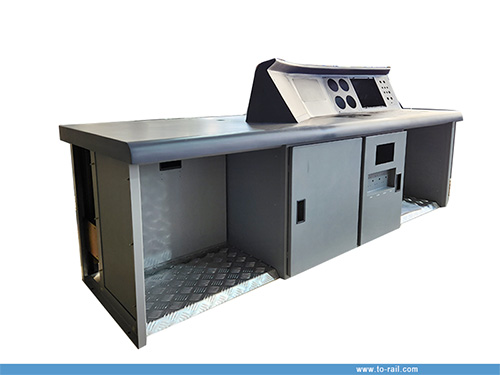
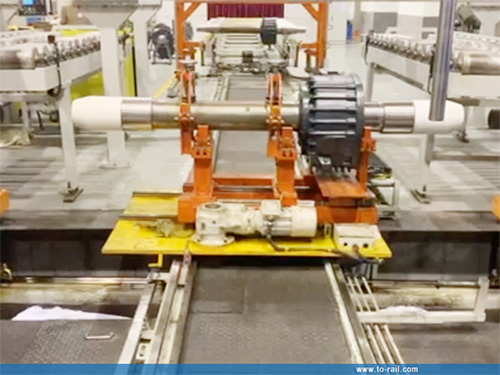
The bogie pressure tester is comprising a gantry, hydraulic cylinder, frame, auxiliary frame, rails, electrical control box, and hydraulic station. The equipment is installed in a pit. After assembly, the bogie is lifted or pushed onto the rails of the auxiliary frame. It is then positioned under the main ram for pressure testing. Upon reaching the set pressure, the cylinder retracts for a second test. Controlled by a PLC and industrial computer, the process automatically collects, records, and analyzes data.
6. Working Process:
Load: Position the assembled bogie on the auxiliary frame rails.
Test: Push the bogie under the ram and perform the pressure test.
Cycle: Retract the cylinder for a second test cycle.
Unload: Extract and remove the tested bogie.
7. Video of bogie pressure tester:
INQUIRY
CATEGORIES
CONTACT US
Name: Ms. Zhang
Mobile:+86-13222235952
Whatsapp:+86-13222235952
Email:sales@to-rail.com
Add:Room B1701, Building 4, Dongfang Xintiandi, Yangshe Town, Zhangjiagang, Suzhou City, Jiangsu Province, China