
Internal Combustion Flexible Shaft Tamper - Railway Maintenance Machinery
- Category: Track Maintenance Equipment
- Model: ND-4.2×4
- Fuel Tank Capacity: 3 L
- Output Power:9.75 KW / 3600 rpm
- Exciting Force: 4.2 KN × 4
Internal Combustion Flexible Shaft Tamper - Railway Maintenance Machinery
1. Brief introduction
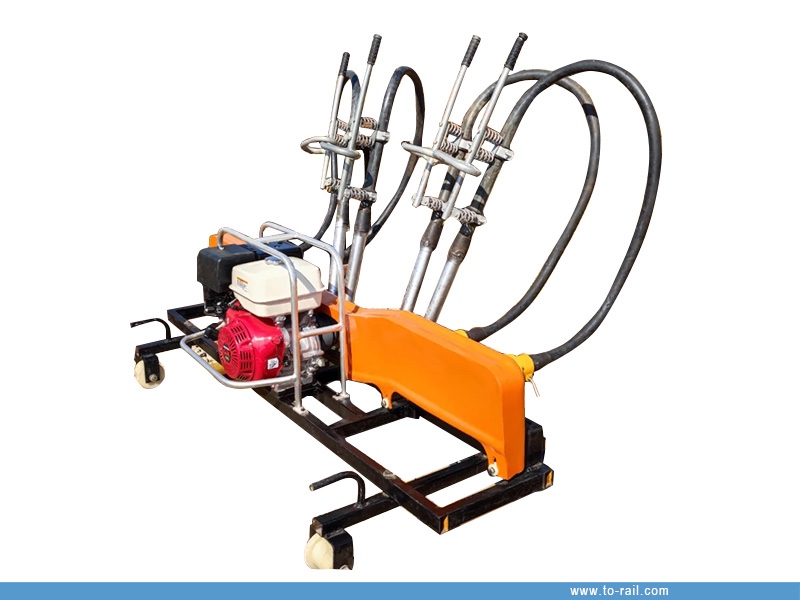
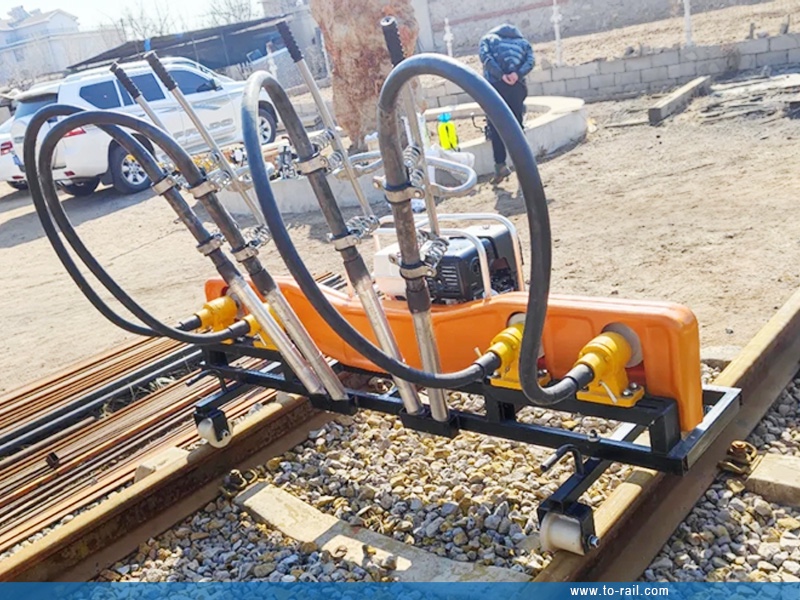
Our Internal Combustion Flexible Shaft Tamper is a high-efficiency, portable new type of railway maintenance equipment, specially designed for single-side railway track maintenance and turnout maintenance under no-power supply conditions. With reliable performance, easy operation and strong adaptability, it is an ideal helper for railway maintenance projects, widely used in railway construction, daily maintenance and emergency repair work.
The tamper is composed of high-quality components, including a Honda GX390 gasoline engine (Japan) as the power source, ensuring stable power output and long service life. The integrated design of flexible shaft, hose, vibration-damping handle and vibrating rod simplifies operation and improves work efficiency. The frame is equipped with a protective cover and lifting handles, making it convenient to move on and off the track, saving labor costs.
2. Product Advantages
Reliable Power Source: Adopts Japanese Honda GX390 four-stroke gasoline engine, with stable output, low fuel consumption and long service life.
Portable Design: Equipped with lifting handles and single travelling wheel, easy to move on and off the track, suitable for various construction scenarios.
Efficient Operation: Vibration frequency up to 150Hz, working efficiency of 200-260 sleepers per group per hour, greatly improving maintenance efficiency.
Easy to Operate: Integrated design of key components, vibration-damping handle reduces operation fatigue, suitable for long-time work.
Strong Adaptability: Suitable for no-power supply conditions, applicable to track and turnout maintenance, with wide application range.
3. Main Technical Parameters
|
Item |
Specification |
|
Model |
ND-4.2×4 |
|
Fuel Tank Capacity |
3 L |
|
Lubricating Oil Capacity |
1.12 L |
|
Fuel Consumption |
Approx. 1.3-1.5 L/h |
|
Gasoline Engine Model |
GX390 |
|
Fuel type |
No.92 pure gasoline grade |
|
Engine Type |
Four-stroke Gasoline Engine |
|
Cylinder Displacement |
0.326 L |
|
Output Power |
9.75 KW / 3600 rpm |
|
Torque |
8.6 N.m / 2500 rpm |
|
Machine Weight |
70 kg |
|
Vibration Frequency |
150 Hz |
|
Amplitude |
1.25 mm |
|
Exciting Force |
4.2 KN × 4 |
|
Working Efficiency |
200-260 sleepers per group per hour (single side) |
|
Vibrating Rod Diameter |
50 mm |
|
Flexible Shaft Diameter |
13 mm |
|
Hose Diameter |
36/46 mm |
|
Total Weight |
≤110 kg |
4. Working Principle
Power from the gasoline engine is transmitted to four output shafts via the centrifugal clutch and belt drive, thus driving the flexible shaft and the rolling cone inside the vibrating rod. One end of the rolling cone is supported by a large-clearance bearing, and the other end performs pure rolling rotation and revolution along the raceway. The eccentrically rotating rolling cone generates centrifugal force, which acts on the rod housing through the raceway and increases vibration frequency. The vibration force is transmitted to the pick body and pick head, generating disturbance force on ballast. Friction between ballast is overcome or reduced, making ballast nearly fluidized and enabling relative movement and rearrangement, thus achieving efficient tamping effect.
5. Main Applications
It is suitable for railway track maintenance construction without power supply. It can be used for ballast tamping after ballast cleaning, as well as maintenance operations on railway tracks and turnouts. It is widely applied in railway lines, stations and other railway maintenance scenarios, effectively improving the stability and safety of railway tracks.
6. Operating Instructions
|
Operation Stage |
Specific Requirements |
|
Pre-operation Preparation |
1. Operators must receive professional training and pass assessment before working. |
|
2. Strictly maintain the machine in accordance with the gasoline engine manual and equipment operation manual; refuel fuel and lubricating oil as specified. |
|
|
3. Turn the connecting handle on the machine head to the top position, insert the flexible shaft plug into the shaft inner hole, insert the connector into the machine head hole, make the connecting handle fall into the arc groove of the connector, lock the connecting handle, and then place the vibrating rod on the frame. |
|
|
4. Inspect all insulation parts, fasten all connectors, and tension the drive belt. |
|
|
Engine Startup & Operation |
1. Start the engine in strict accordance with procedures specified in the gasoline engine user manual and operation manual. |
|
2. Lift the whole machine onto the track, pull out the single travelling wheel from the support pipe and place it on the other rail, then lock the fastening screws. Take out the vibrating rod and lightly tap its front end on the ground; it can be used when buzzing vibration occurs. |
|
|
3. Two machines shall be used in pairs for tamping, placed on both sides of the sleeper respectively. Do not use the vibrating rod to pry sleepers or rails. Avoid collision between pick head and rails, sleepers and connecting fittings. |
|
|
Shutdown Procedure |
1. After tamping completion, shut down the engine and remove the machine from the track promptly to outside the track clearance limit. When walking on the road shoulder, retract the single travelling wheel into the support pipe and lock fastening screws. |
|
2. Prevent fuel overflow when refueling during machine transportation. |
|
|
3. After use, store the vibrating rod in a dry place, and keep the flexible shaft and hose in a straight state. |
7. Video:
INQUIRY
CATEGORIES
CONTACT US
Name: Ms. Zhang
Mobile:+86-13222235952
Whatsapp:+86-13222235952
Email:sales@to-rail.com
Add:Room B1701, Building 4, Dongfang Xintiandi, Yangshe Town, Zhangjiagang, Suzhou City, Jiangsu Province, China