
Rail Joints Fish Plate Insulated Rail Joint Frozen Joint Insulation Joint
- Category: Track accessories
Rail Joints Fish Plate Insulated Rail Joint Frozen Joint Insulation Joint
1. Brief introduction:
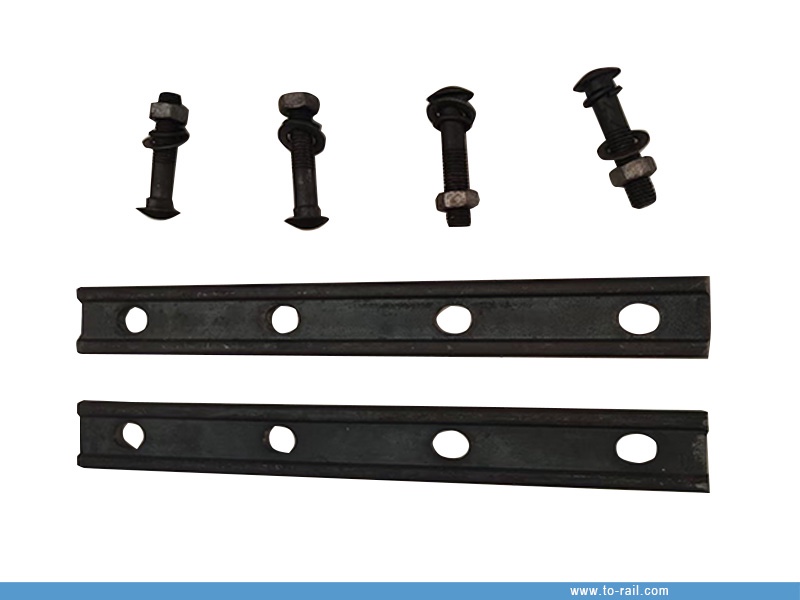
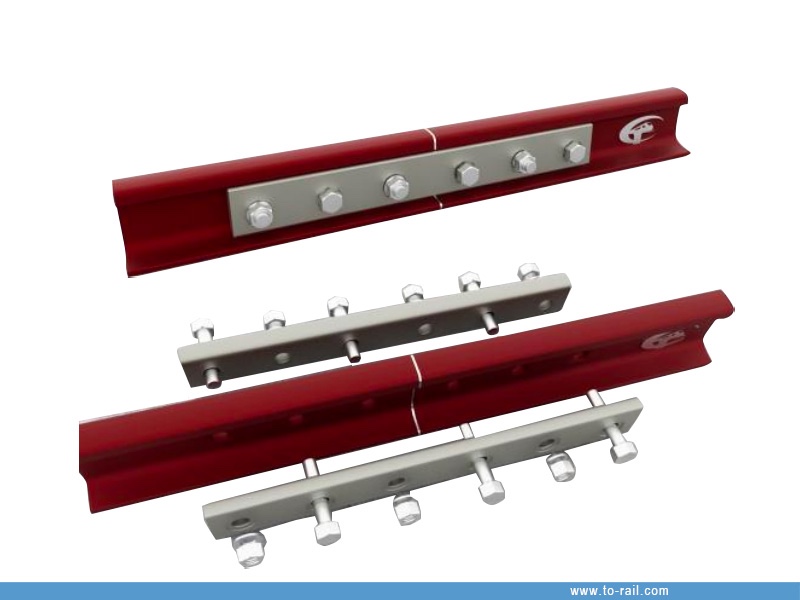
Rail joint, also called fish plate, is a critical component in railway tracks that connects two sections of rails. Composed of splice plates (fishplates), bolts and other parts, a preset rail gap of 8~10mm is reserved between the two rail ends to adapt to temperature changes, ensuring the stability and safety of the track under different temperature conditions.
Rail fish plates are manufactured from ductile iron and carbon steel. Classified by material, they fall into three categories: cast, rolled, and forged splice plates. In China, the double-ended fish plate is universally adopted. The top and bottom surfaces of the plate are sloped to match the gradients of the lower part of the rail head and the top surface of the rail base, respectively. After the fish plate is fastened with rail joint bolts, its sloped top and bottom surfaces wedge against the rail head and rail base, enabling it to bear the wheel loads at the rail joints.
As an integral part of the railway track system, our rail joints are manufactured in strict accordance with international standards (ISO, UIC, EN, etc.), with excellent structural strength, wear resistance and stability, effectively ensuring the smooth operation of trains and extending the service life of the track.
2. International standards of fish plates:
|
Fish plate standards |
Rail type |
Fish plate materials |
|
TB/T 2345-2008 |
43kg/m, 50kg/m, 60kg/m |
B7 |
|
BS47-1 |
BS75R, BS80A, BS90A, BS100A, BS113A |
Grade 700 |
|
JIS E 1102-2001 |
37A, 50N, CR73, CR100, BS113A |
SS490, S20C |
|
AREMA 2007 |
115RE, 132RE, 136RE, 104lb.CR, 105lb.CR, 135lb.CR, 171lb.CR,175lb.CR |
Grade 55# |
|
UIC864-4/864-8 |
UIC54, UIC60 |
Grade 700 |
4. Classifications of fish plates:
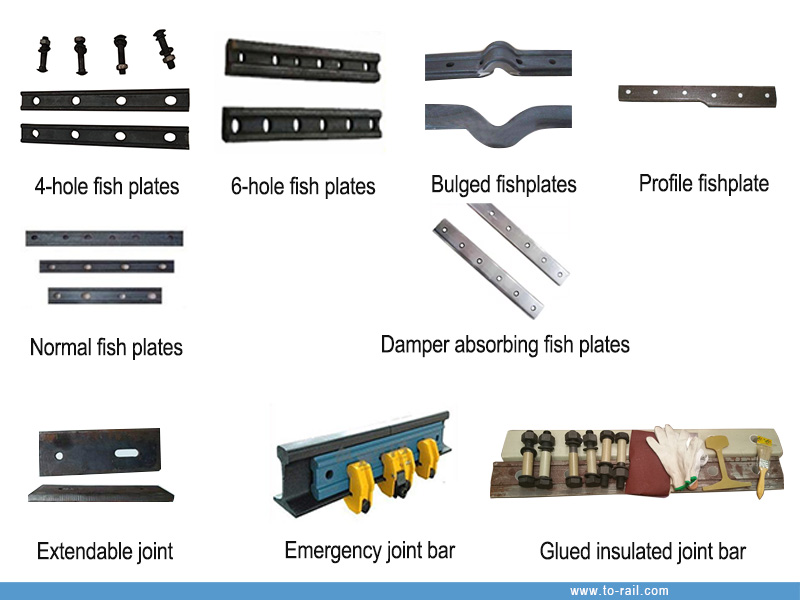
According to the differences in performance, rail fish plates can be divided into seven categories, covering various railway operation scenarios and meeting diverse functional requirements:
- Ordinary fish plates (Common Rail Joint)
- Heterogeneous fish plates(Different-Spec Rail Joint)
- Insulated fish plates
- Current-Conducting fish plates
- Frozen Joint
- Bonded fish plates (Adhesive Joint)
- Expansion Joint
INQUIRY
CATEGORIES
CONTACT US
Name: Ms. Zhang
Mobile:+86-13222235952
Whatsapp:+86-13222235952
Email:sales@to-rail.com
Add:Room B1701, Building 4, Dongfang Xintiandi, Yangshe Town, Zhangjiagang, Suzhou City, Jiangsu Province, China