
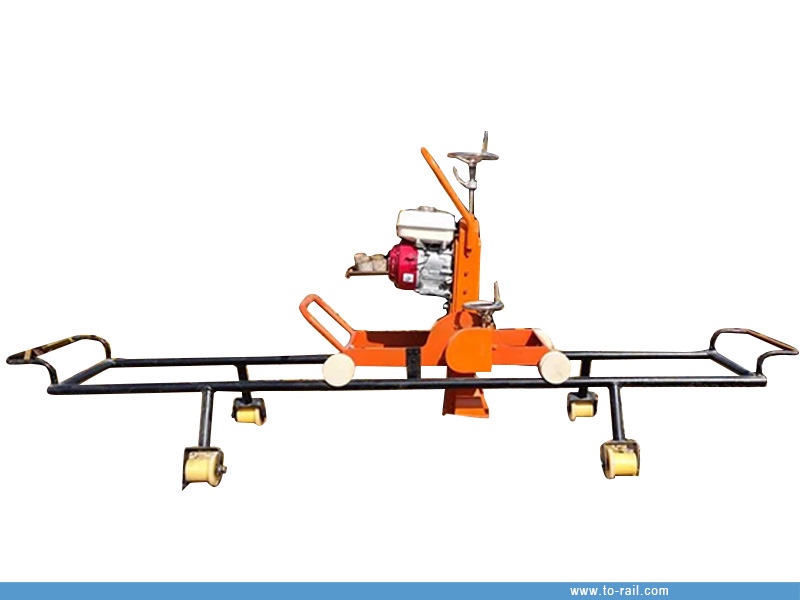
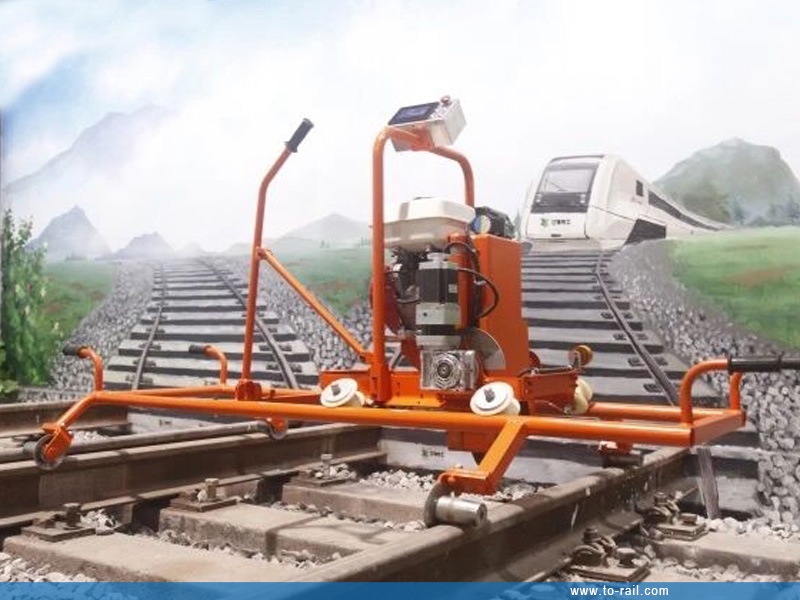
NCM-4.0 Internal Combustion Switch Rail Grinder Railway Turnout Rail Profile Grinding Machine
- Category: Track Maintenance Equipment
- Model: NCM-4.0
- Engine Power: 6.5 HP (4.8 kW)
- Fuel Consumption: Approx. 1.4 L/h
- Grinding Wheel Size: φ254 × φ30 × 35 mm
NCM-4.0 Internal Combustion Switch Rail Grinder Railway turnout Rail Profile Grinding Machine
1. Overview
NCM-4.0 internal combustion switch rail grinder (commonly known as turnout grinder) is mainly used for grinding the top and side fat edges of switch rails, frog center rails and wing rails in turnout switch assemblies. It can also grind the top and side fat edges of various types of standard rails. Featuring superior performance, reasonable structure and reliable quality, it greatly improves efficiency and reduces labor intensity, making it an essential machine for track maintenance in railway public works departments.
2. Key Applications
• Grinding of Railway turnouts (switch rails, frog rails, wing rails)
• Removal of fat edges on various steel rail surfaces and sides
• Routine track maintenance and rail profile finishing
3. Technical Specifications
|
Item |
Details |
|
Model |
NCM-4.0 |
|
Abbreviation |
Turnout Grinder |
|
Engine Type |
4-stroke gasoline engine |
|
Engine Model |
GX160 |
|
Engine Power |
6.5 HP (4.8 kW) |
|
Engine Speed |
3600 rpm |
|
Fuel Tank Capacity |
1.8 L |
|
Fuel Consumption |
Approx. 1.4 L/h |
|
Fuel Requirement |
92# pure gasoline |
|
Grinding Head Inclination |
±40° adjustable |
|
Grinding Wheel Size |
φ254 × φ30 × 35 mm |
|
Net Weight |
100 kg |
|
Overall Dimensions |
1680 × 900 × 900 mm |
4. Main Structure
|
Component |
Description |
|
Main Composition |
Travel wheels, grinding carriage, gasoline engine, grinding head, grinding head swing device, lifting device, front-rear feeding device |
|
Travel Frame |
Rectangular telescopic frame, adjustable according to on-site gauge; equipped with 4 insulated iron travel wheels |
|
Grinding Carriage |
Main body of the machine; powered by 4.8 kW gasoline engine; driven by belt and gear transmission for swing, lifting and feeding movement |
4. Working Principle
The grinder is placed on the track at the position to be ground and can run along the rail. The grinding carriage moves transversely on the travel frame to position at any point of the turnout. The height of the grinding head is adjusted via a lead screw handle to align with the target area. The machine is manually pushed along the rail to perform continuous grinding operation.
5. Operation Instructions
|
Stage |
Steps |
|
Pre-operation Preparation |
1. Check fuel and engine oil levels; do not overfill fuel to avoid spillage during inclined operation. 2. Inspect belt wear, fastener tightness and spindle radial clearance. 3. Verify grinding wheel model, check for cracks and firm installation; ensure grinding wheel guard is intact. 4. Check transverse and longitudinal travel wheels for damage. |
|
Machine Operation |
1. Set the main machine to a horizontal position. 2. Open fuel valve, close choke, set throttle to low speed; pull recoil starter to start engine; set stop switch to ON; after startup, return choke to original position and idle warm-up before increasing speed for grinding. 3. Wear required safety protective equipment during operation. 4. Adjust the grinding feed amount slowly to avoid the grinding wheel hitting the rail; stop the machine immediately if there is abnormal noise, and resume operation only after troubleshooting. |
|
Shutdown |
1. First reset the grinding wheel, adjust the engine to a horizontal position, then push the throttle handle to low speed, set the stop switch to OFF position, and close the fuel valve. 2. If refueling is needed midway, stop the machine first and take fire prevention measures. |
6. Video:
INQUIRY
RELATED PRODUCTS
CATEGORIES
CONTACT US
Name: Ms. Zhang
Mobile:+86-13222235952
Whatsapp:+86-13222235952
Email:sales@to-rail.com
Add:Room B1701, Building 4, Dongfang Xintiandi, Yangshe Town, Zhangjiagang, Suzhou City, Jiangsu Province, China